Retinals are the most pick me retinoids of all time
If you spend any time in skincare communities, you've probably seen the claim: retinal is 11 times stronger than retinol.
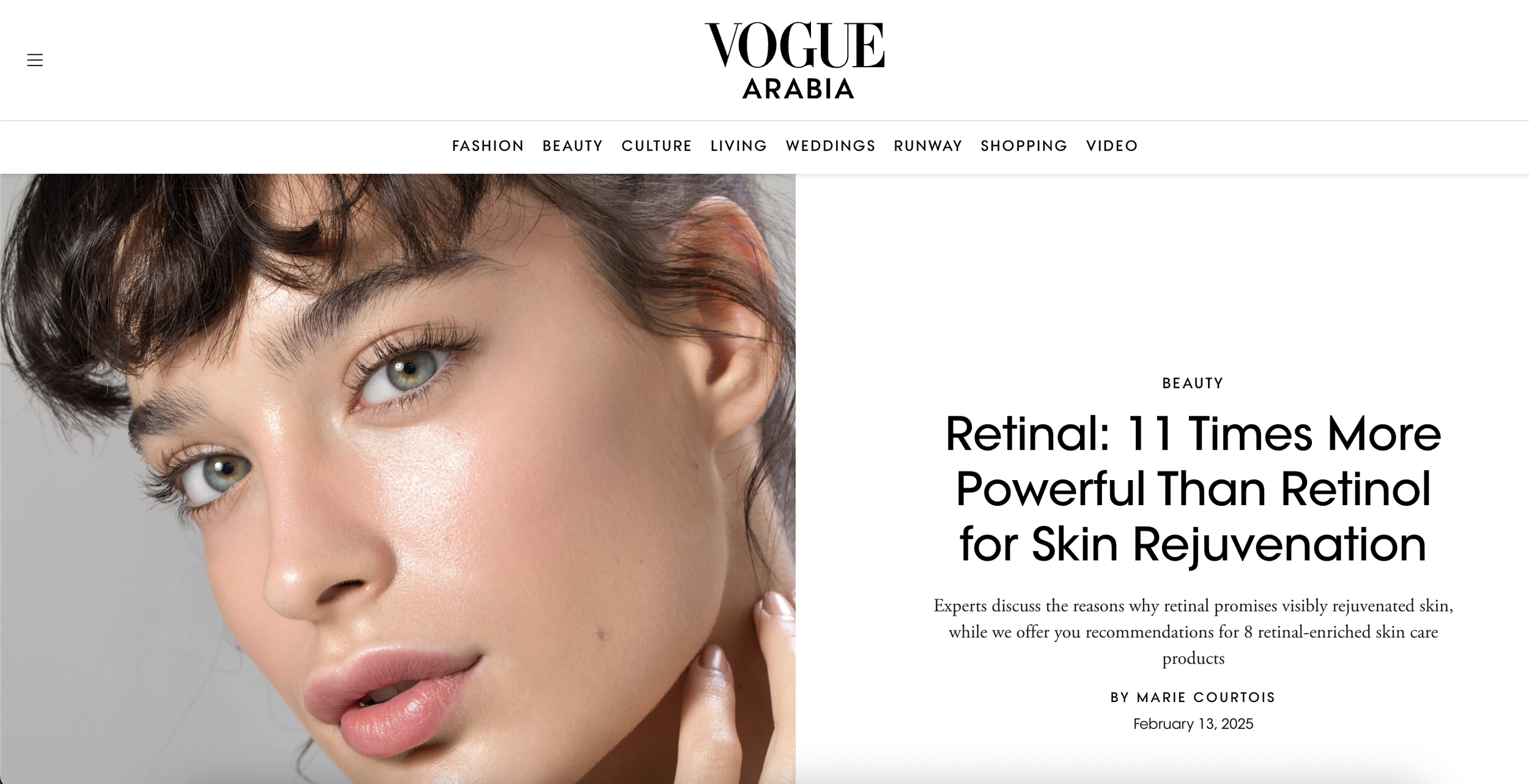
Vogue Arabia article title “Retinal: 11 Times More Powerful Than Retinol for Skin Rejuvenation”
I'm Dr. Sarah Sheu, a Stanford-trained dermatologist practicing in the Seattle area. In this post, I'm breaking down where the "11x stronger" claim actually comes from, what the science really says, and what it means for you when you're deciding which retinoid to buy.
Retinol vs. Retinal: What's the Difference?
Both retinol and retinal (also called retinaldehyde) are over-the-counter forms of vitamin A used in skincare. Neither is the active form your skin cells actually use. That would be retinoic acid, the ingredient in prescription-strength tretinoin.
RetinOL requires two conversion steps to become retinoic acid inside your skin cells — one slow step (retinol to retinal), then one fast step.
retinol → retinal → retinoic acid (active form)
RetinAL only requires one fast conversion step. It's 1 step closer to the active form.
retinal → retinoic acid (active form)
Where Does the "11 Times Stronger" Claim Come From?
The claim traces back to a lab study by Dr. Siegenthaler, published in the Biochemical Journal. Some brands — including Medik8, whose Crystal Retinal line I actually like — cite this study on their product pages to support claims like "retinaldehyde is proven to work up to 11 times faster than standard retinol."
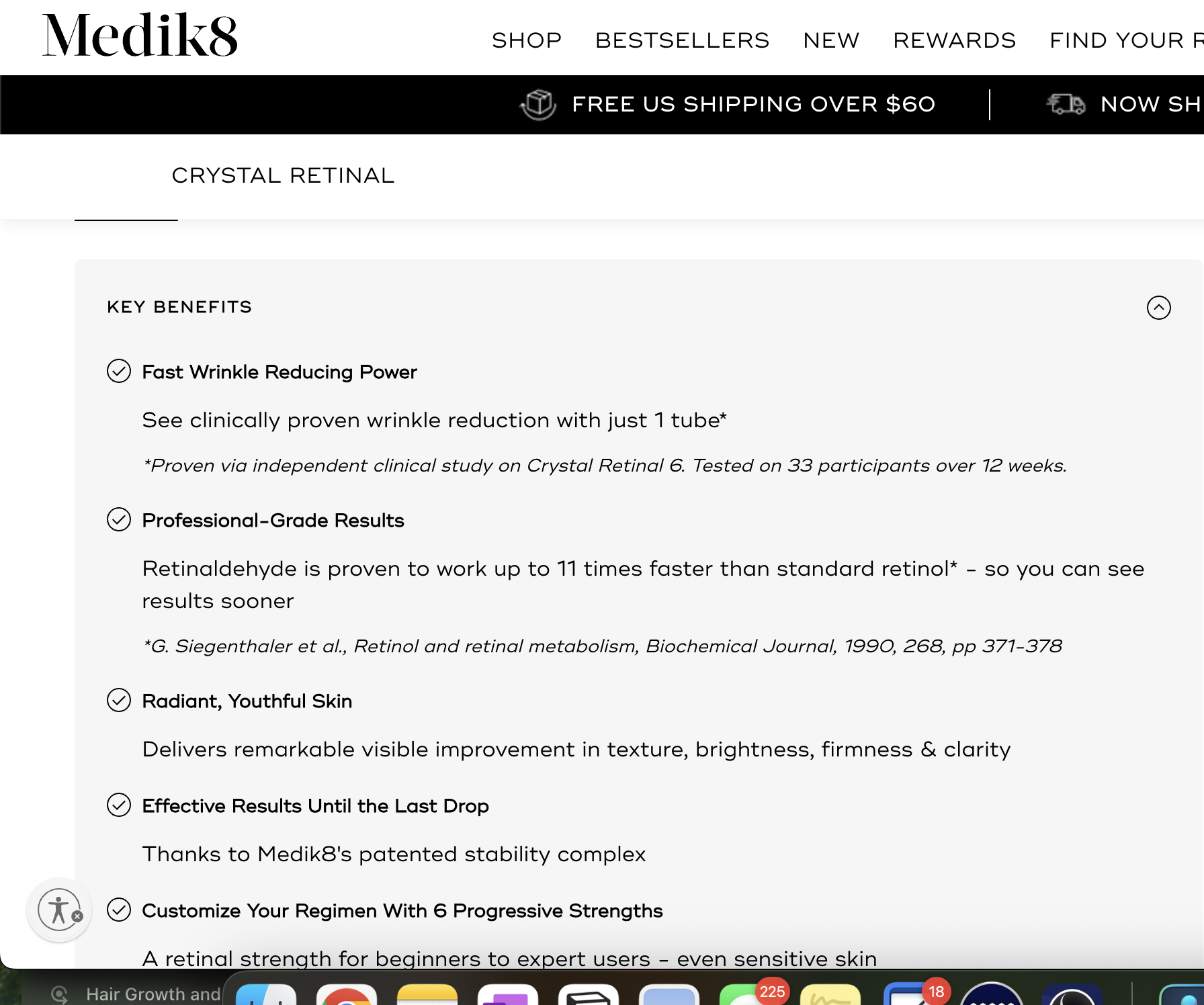
Medik8 Crystal Retinal website’s claim that “Retinaldehyde is proven to work up to 11 times faster than standard retinol* - so you can see results sooner”
The reference for this claim is this study:
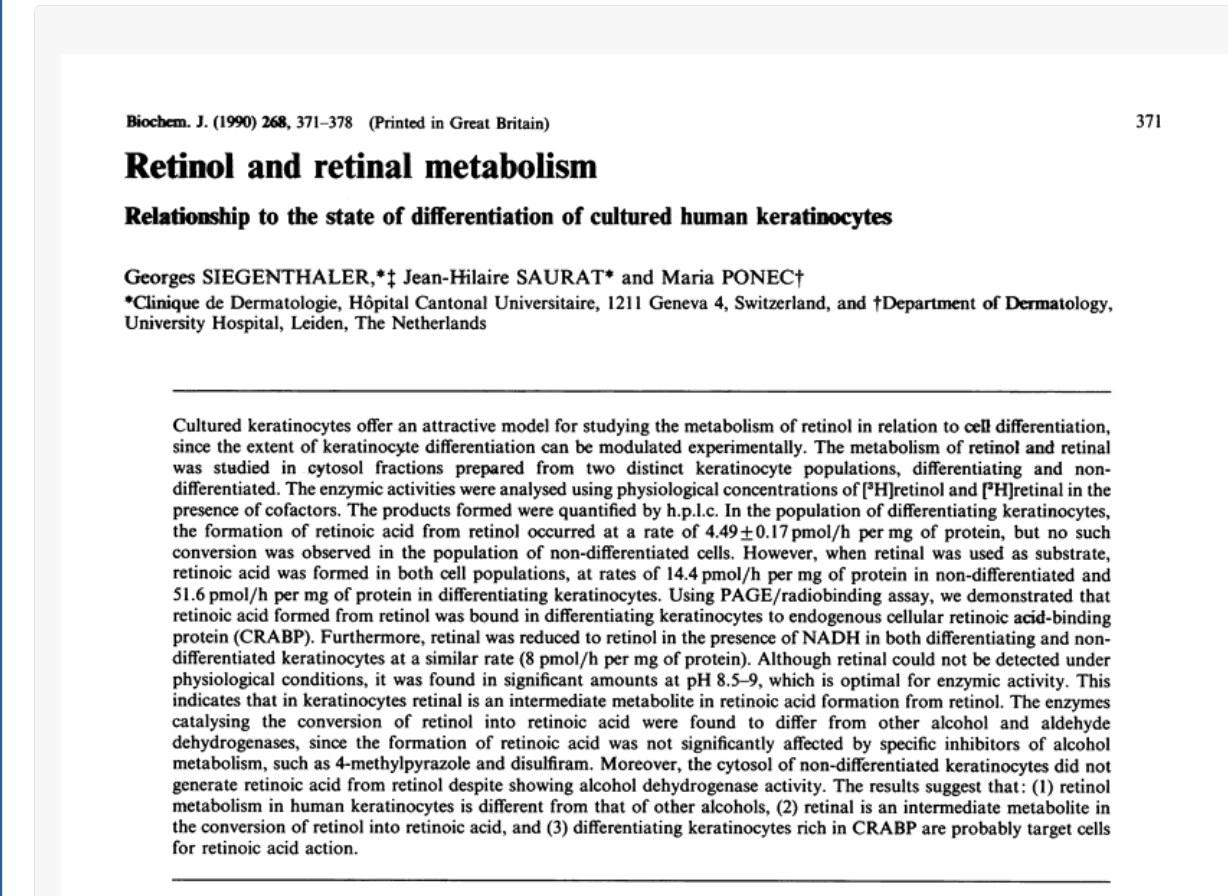
Dr. Siegenthaler’s paper that’s the basis for this often repeated “11 times stronger” claim. As you can tell by the abstract, it’s a fun, light read.
https://pmc.ncbi.nlm.nih.gov/articles/PMC1131442
Here's the problem: that study wasn't measuring how well retinoids work on skin. It was a lab experiment using cultured human skin cells grown in dishes.
Researchers exposed those cells to retinol and retinal, then measured how quickly each one was converted into retinoic acid. In those lab conditions, cells produced 11 times more retinoic acid per hour when starting with retinal compared to retinol.
That's an interesting biochemistry finding — but it does not tell us that retinal is 11 times more effective at reducing wrinkles, improving skin texture, or treating acne in actual human skin.
It also does not tell us that you retinal will give you results 11 times faster than retinol.
What Does Clinical Research Actually Show?
A more relevant study directly compared 0.5% retinol to 0.1% retinal in human skin. This is the kind of evidence that actually matters for understanding real-world performance. I did not see a justification for why these specific percentages were selected; unfortunately, this is the best evidence I was able to find clinically comparing retinol to retinal.
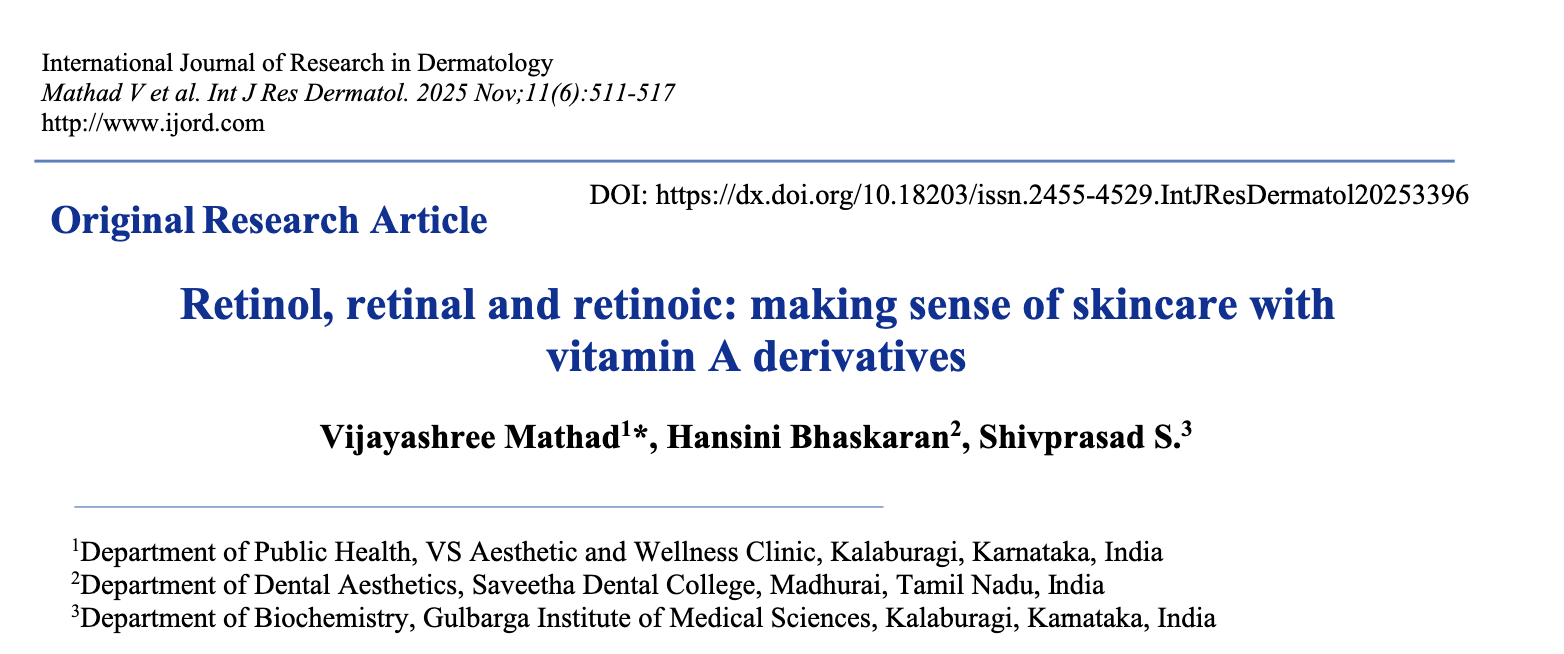
Clinical study by Mathad et. al comparing the clinical effects of retinol, retinal, and retinoic acid. You can find the full text here: https://www.researchgate.net/publication/396904476_Retinol_retinal_and_retinoic_making_sense_of_skincare_with_vitamin_A_derivatives
Here's what it found:
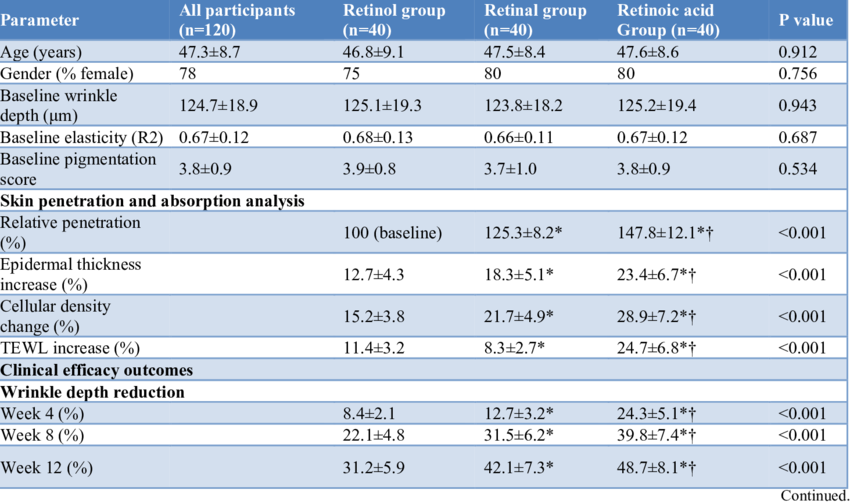
Figure from the Mathad paper showing measured differences in penetration, epidermal thickness, and wrinkle depth reduction with retinol, retinal, and retinoic acid
Skin penetration: RetinAL showed 1.25x more skin penetration than retinol.
Skin thickness: RetinAL produced a 1.3x improvement compared to retinol.
Wrinkle depth at 12 weeks: Retinal achieved a 1.4x reduction compared to retinol.
Yes, retinal outperformed retinol — but by a factor of 1.25 to 1.4, not 11. The difference is real but modest, and nowhere near what the marketing suggests.
Also worth noting: tretinoin (prescription-strength retinoic acid) outperformed retinal in every measure in this same study. So I don’t want to hear any more garbage about how retinal is the best retinoid out there.
So, Should You Switch From Retinol to Retinal?
Not necessarily. Here's how I think about it for my patients and for people with sensitive skin:
For those new to retinoids, I usually recommend starting with an over-the-counter retinol or retinal before jumping to prescription-strength options. Think of it like learning to ride a bike with training wheels — it gives your skin a chance to ease in, with a lower risk of redness and peeling.
If your current retinol is working well and your skin tolerates it, there's no urgent reason to switch. The difference between retinol and retinal is real, but it's been significantly overstated by marketing. You're not "falling behind" by using retinol. It’s not the difference between Melisandre Game of Thrones before and after taking off her magical necklace.

Melisandre from Game of Thrones
If you're interested in trying retinal, there are some excellent options available (I'll cover specific product recommendations in Part 3 of this series, including budget-friendly picks and prescription-strength options).
